
Discover how a robust po system can streamline procurement, enhance transparency, and cut costs across departments. Visit https://cloudb2b.co.uk/ to explore scalable solutions and trusted vendors. Implementing an effective po system supports compliance, efficiency, and strategic sourcing.
The po system streamlines procurement, invoice matching, and spend visibility for growing businesses. By standardizing purchase requests, approvals, and budgets, teams reduce cycle times and errors. Effective po system implementation enforces policy compliance, improves supplier relationships, and enhances financial control through real-time tracking and audit trails. Organizations often customize workflows to fit unique approvals, catalog usage, and contract terms. For practical insights, see this resource: https://vendorcentric.com/single-post/when-does-it-make-sense-to-use-a-purchase-order/.
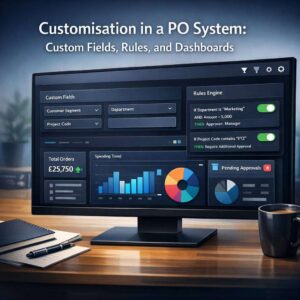
In the modern landscape of business operations, a robust po system software solution is not a luxury but a necessity. For organisations seeking efficiency, visibility, and control over purchasing activities, the ability to tailor a purchase order system to unique processes is transformative. Customisation in a PO System encompasses three core pillars: custom fields, rules, and dashboards. When implemented thoughtfully, these elements align procurement practice with strategic objectives, improve data quality, and accelerate decision making.
Custom Fields: Capturing Organisation-Specific Data
Every business operates with its own vocabulary, regulatory obligations, and supplier relationships. Standard fields in a po system software often cover the basics—vendor, currency, PO number, lines, quantities, prices. Yet, the real value emerges when organisations add custom fields that reflect their specific needs. Custom fields enable procurement teams to capture information that is pivotal to downstream workflows, reporting, and compliance. For example, a construction firm might add fields for project codes, site locations, or supplier risk ratings. A manufacturing company could include fields for bill of materials references, batch numbers, or quality assurance checkpoints. By extending data capture beyond the defaults, the purchase order system becomes a more expressive, decision-ready record rather than a rigid container of standard attributes.
Beyond mere data capture, well-chosen custom fields support better categorisation and searchability. They enable nuanced reporting—such as categorising spend by department, project, or contract term—and improve the accuracy of analytics that drive strategic sourcing. Importantly, custom fields should be designed with governance in mind: define data types, validation rules, and mandatory versus optional status to maintain data integrity as the po system for small business scales. When teams trust the data, they unlock more confident approvals, forecasting, and supplier assessment.
Rules: Automating Governance and Efficiency
Rules within a PO system software are the rule-based engines that translate business policy into automated action. Customisation through rules reduces manual tasks, enforces compliance, and enhances speed without sacrificing control. For a po system, typical rule categories include spend thresholds, approval routing, duplicate detection, supplier embargoes, and budget consumption. For organisations using a purchase order system, rules can be tailored to reflect approval hierarchies, project-based spending limits, or contract terms.
Effective rules start with clear objectives. An organisation might implement a rule that routes high-value requisitions to senior approvers or requires two bid verifications for non-contracted items. Another rule could automatically flag PO lines that would exceed the allocated budget for a project, triggering an exception workflow and notifying the owner. Rules can also enforce supplier-related conditions, such as mandatory vendor onboarding steps, minimum delivery lead times, or compliance checks for regulatory requirements. When combined with custom fields, rules become more precise. For instance, a rule could require additional approvals if a custom field indicates a supplier risk rating above a defined threshold or if a project code signals a compliance review is needed.
The beauty of rule-based automation lies in reducing human error and cycle times. However, rules should be implemented with a balance of rigidity and flexibility. Overly prescriptive automation can hinder responsiveness, while underdeveloped rules may miss critical governance gates. Regular review, testing in sandbox environments, and change management are essential to ensure that rules remain aligned with evolving business priorities and external regulations.
Dashboards: Real-Time Insight and Actionability
Dashboards are the interface through which stakeholders perceive, interpret, and act on procurement data. In a po system for small business, dashboards translate complex datasets into intuitive visuals—charts, scorecards, trend lines, and exception lists. Customisation of dashboards is central to achieving situational awareness across the organisation. By incorporating custom fields into dashboards, teams can monitor metrics that matter most to their roles. For a financial controller, a dashboard might highlight spend by department against budget, supplier contract utilisation, and PO cycle times. A category manager could track supplier performance, lead times, and non-compliance events. A procurement administrator might focus on PO completion rates, approval bottlenecks, and real-time escalation alerts.
A well-designed dashboard supports proactive management. Real-time dashboards in a purchase order system enable early detection of anomalies, such as late deliveries, PO changes, or price variances, allowing teams to take corrective actions before issues escalate. Dashboards should be configured for clarity and accessibility, with role-based views and drill-down capabilities. Visual cues—colour-coded status indicators, percentile bands, and risk gauges—guide attention to where it’s most needed. Additionally, dashboards should integrate with broader financial and ERP ecosystems, ensuring a seamless flow of data and reducing the cognitive load required to manage procurement activities.
Strategic Considerations for Effective Customisation
When pursuing customisation in a PO System, organisations should adopt a methodical approach. Start with mapping core procurement processes and identifying data elements that are critical for reporting and governance. From there, define a limited set of custom fields that deliver tangible value without fragmenting data standards. Establish naming conventions, data validation rules, and maintenance ownership to preserve data quality over time. For rules, begin with high-impact automations that address bottlenecks or compliance risks, then iterate based on feedback and measured outcomes. For dashboards, involve key stakeholders early to ensure the visuals align with decision-making needs and do not overwhelm users with noise.
Security and compliance are fundamental considerations. Custom fields and rules should be designed within the governance framework of the po system for small business, ensuring that data privacy, access controls, and audit trails are preserved. Regular audits of field usage, rule effectiveness, and dashboard relevance help sustain the value of the customisation over the system’s lifecycle.
In choosing a purchase ordering software or a po system software, verify that the platform supports flexible schema extension, rule engines with policy testing capabilities, and rich, interactive dashboards. Compatibility with integration points—such as ERP, accounting, supplier networks, and e-procurement portals—also determines long-term value. A well-architected po system, supported by thoughtful custom fields, robust rules, and insightful dashboards, empowers organisations to exercise greater control over spend, improve supplier performance, and accelerate procurement processes across the enterprise.