
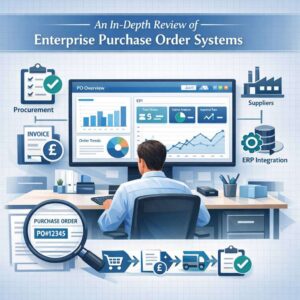
Purchasing is a core function of any organisation, and the efficiency of that function hinges on the robustness of the purchase order (PO) process. Enterprise PO systems are designed to streamline requisitions, approvals, and supplier management while delivering visibility, control, and financial accuracy across the procurement lifecycle. This article examines the key features, benefits, and considerations for organisations seeking a reliable PO system within a modern enterprise landscape.
In today’s digitally driven environment, many organisations are migrating to cloud based purchase order software to gain scalability, real-time data, and improved collaboration. The distinction between traditional on-premises solutions and contemporary cloud based options can be profound, affecting not only cost models but also deployment speed, security, and interoperability with broader enterprise resource planning (ERP) ecosystems. This review provides practical guidance for evaluating po system software and choosing a solution that aligns with strategic procurement goals.
What is a PO system and why it mattersA PO system, sometimes referred to as software for purchase order or purchase ordering software, is specialised tooling that automates the end-to-end PO lifecycle. From initial request through purchase approval, order dispatch, receipt confirmation, and invoice matching, a well-implemented system reduces manual effort, mitigates maverick buying, and enhances spend control. Modern PO system software typically includes supplier master data management, workflow capabilities, budget checks, audit trails, and comprehensive reporting. For organisations in the UK, a purchase order system uk often emphasises compliance with local VAT rules, invoicing standards, and supplier due diligence.
Core features to expect
- Requisition and workflow automation: Capture needs, route for approvals based on policy, and enforce budgetary constraints.
- Supplier management: Maintain up-to-date supplier records, performance metrics, and contract terms within the po system.
- Purchase order creation and dispatch: Generate POs from approved requisitions, send electronically to suppliers, and track status.
- Receipt and matching: Log goods receipt, reconcile with invoices, and support three-way matching to reduce errors.
- Budget and spend controls: Real-time budget checks, exception handling, and policy enforcement.
- Integrations: Seamless connections with ERP, accounting software, inventory management, and e-invoicing platforms.
- Auditability and compliance: Immutable audit trails, role-based access, and approval histories for governance.
- Reporting and analytics: Dashboards for spend analytics, supplier performance, cycle times, and trend analysis.
- Cloud based deployment: Scalable, securely hosted software with regular updates, accessible from multiple locations and devices.
Cloud based vs on-premises: considerations for the modern enterpriseCloud based purchase order software offers numerous advantages for large organisations: reduced capital expenditure, predictable operating costs, automatic updates, and accelerated deployment. It also supports multi-branch operations, remote teams, and robust disaster recovery. On-premises solutions, while offering maximum data control, can incur higher maintenance costs and slower iteration cycles. For many enterprises, a hybrid approach combining on-premise ERP with cloud PO systems provides a pragmatic balance between control and agility.
Security and compliance are paramount, particularly in regulated industries. When evaluating a cloud based option, assess data residency, encryption standards, access management, and vendor risk assessments. Ensure the vendor provides clear service level agreements (SLAs), uptime guarantees, and incident response procedures. For organisations operating in the UK, ensure the solution aligns with UK tax and invoicing requirements and supports integration with HMRC reporting where applicable.
Selecting the right purchase order system
Implementation best practices
- Map current processes: Document requisition-to-invoice workflows before configuring the system.
- Pilot in stages: Start with a single department or supplier segment to test configurations and policies.
- Standardise supplier data: Clean, consistent supplier records prevent duplicate POs and improve reporting.
- Define approval rules clearly: Establish thresholds, approvers, and escalation paths to avoid bottlenecks.
- Align with ERP and finance processes: Ensure PO lifecycle parity with accounts payable, fixed asset implications, and taxation.
- Establish governance and controls: Create audit trails, role-based access, and compliance checks to support governance.
Benefits realised by enterprise users
- Reduced cycle times: Automated approvals and PO generation accelerate procurement cycles.
- Improved spend visibility: Real-time dashboards and analytics enable better forecasting and budgeting.
- Enhanced supplier collaboration: Electronic PO distribution and confirmations streamline supplier workflows.
- Stronger control environment: Policy-driven workflows reduce maverick buying and enable compliance.
- Accurate financial reconciliation: Three-way matching minimises invoice discrepancies and payment delays.
Common challenges and mitigations
- Resistance to change: Invest in training and early wins to demonstrate value.
- Data quality issues: Cleanse supplier and product master data as part of the rollout.
- Integration complexity: Choose vendors with proven integration accelerators and robust APIs.
- Customisation overhead: Start with standard configurations; only tailor where it adds measurable value.
Industry trends to watch
- AI-assisted workflow optimisation: Intelligent routing and exception handling to further reduce cycle times.
- E-invoicing and supplier networks: Deeper integration with supplier networks to streamline invoice processing.
- Mobile-first PO management: Field professionals can approve and create POs on the go, improving responsiveness.
- Compliance-aware automation: Enhanced controls for VAT, tax reporting, and regulatory reporting in the UK and beyond.
Final thoughtsAn enterprise po system should not be viewed as a mere purchasing tool but as a strategic enabler of financial discipline, supplier collaboration, and operational agility. Whether a cloud based purchase order software or a more traditional po system software solution, the right choice depends on alignment with organisational priorities, data governance, and the pace of digital transformation. For UK organisations, choosing a solution that harmonises with local requirements while offering robust cross-border capabilities will help realise sustainable procurement improvements and measurable ROI.
glossary notes
- purchase order system uk: Solutions tailored for UK tax compliance, invoicing, and regulatory needs.
- po system: Generally refers to the central software handling purchase orders across requisition, approval, and invoicing stages.
- purchase order systems: A family of software products designed to manage the full lifecycle of POs in organisations.
- purchase ordering software: Alternative term for tools that manage the creation, approval, and tracking of purchase orders.
- cloud based purchase order software: PO systems delivered as a cloud service, offering scalability and remote access.
- software for purchase order: Broad descriptor for any application that handles PO generation, approval, and processing.
Seeking efficiency and accuracy, purchase order systems streamline procurement workflows, reduce errors, and accelerate approvals. businesses can control spend, improve supplier collaboration, and gain real-time visibility. Explore intelligent options at https://cloudb2b.co.uk/.
Purchase order systems streamline procurement, automate approvals, and improve supplier collaboration. They help businesses track inventory levels, manage costs, and reduce manual errors throughout the purchasing cycle. By centralizing requisitions, organizations gain visibility, compliance, and faster turnaround times on orders. For more details on a leading solution, explore the following resource in the second half: https://squareup.com/au/en/point-of-sale/retail/features/purchase-orders.